
Lapsed customers: how to spot them by their own rhythm and win them back
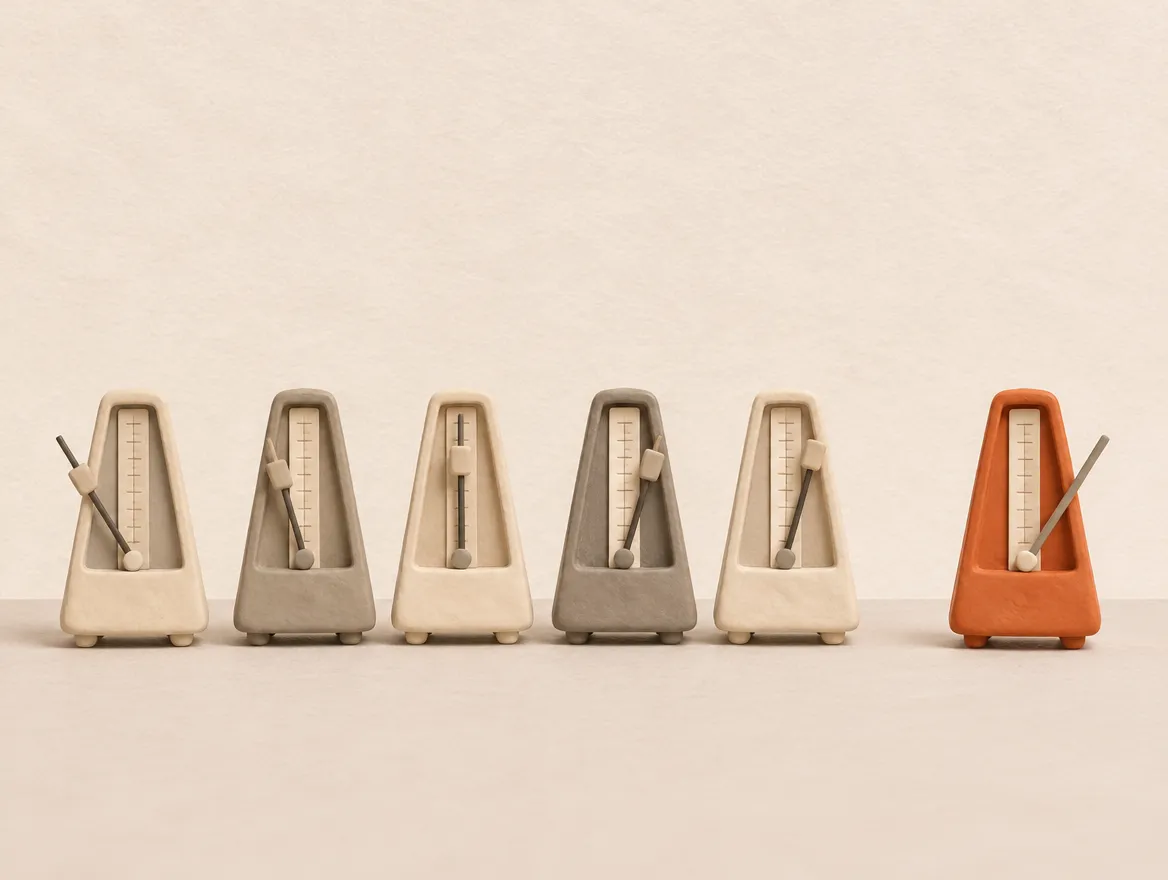
A customer who buys monthly is gone by day 90. A customer who buys twice a year is just getting started. Your win-back flow should know the difference.
Key takeaways
- A lapsed customer is one who has gone noticeably past their usual time between orders, not one who has crossed a single store-wide cutoff.
- A fixed 180-day rule reaches frequent buyers months too late and flags slow buyers who aren't even late yet.
- Define lapsing by orders, not email opens: Apple Mail Privacy Protection makes opens unreliable.
- Mailing people who will never return can hurt deliverability for everyone else, so end every win-back with a sunset step.
- Some lapsed customers come back on their own, so measure a win-back against a random holdout.
Lapsed customers are people who used to buy from you and have gone well past their usual time between orders without coming back. They haven't unsubscribed or complained. They've just gone quiet. Most stores spot lapsed customers with one cutoff, such as "no order in 180 days", and send everyone over the line the same win-back email. This guide shows why a single cutoff gets it wrong, how to identify lapsed customers by their own buying rhythm, what to send them, and how to prove the win-back worked.
What is a lapsed customer?
A lapsed customer has broken their own pattern. They used to buy every few weeks or every few months, and now that gap has stretched well past normal. Online shoppers don't cancel, so a missing order is usually the only sign you get.
It helps to separate three states:
| State | What it means | What to do |
|---|---|---|
| Active | Ordering roughly on their usual rhythm | Normal marketing |
| Lapsed | Clearly overdue, but still reachable | Win-back effort, timed to them |
| Churned | You've decided they're gone | Stop spending to reach them |
Lapsed is the middle state, and it's the one worth money. Active customers don't need rescuing. Churned customers mostly won't come back whatever you send. The customer churn guide covers that last stage and how to measure it.
Treat "lapsed" as a window of opportunity with a start and an end, not a label someone wears forever.
Why one store-wide cutoff gets lapsed customers wrong
Here's the problem with a single number. Take two customers in an illustrative store. Customer A buys coffee pods roughly every 35 days. Customer B buys a winter jacket and a pair of boots roughly every 200 days. The store flags anyone who hasn't ordered in 180 days as lapsed.
| Customer A | Customer B | |
|---|---|---|
| Usual gap between orders | 35 days | 200 days |
| Day 120 since last order | 3.4 gaps late, not flagged | Not late, not flagged |
| Day 190 since last order | Flagged, after missing about five orders | Flagged, though still inside their usual gap |
| Flagged at twice their own gap | Day 70 | Day 400 |
The 180-day rule fails both of them. Customer A is ignored for months while they're clearly drifting, then gets a win-back email when they've probably found new coffee. Customer B gets a "we miss you" email before they've even missed anything, which is a bit like a friend asking where you've been the day after dinner.
A store-wide lapse cutoff is too late for your most frequent buyers and too early for your slowest ones, and those are usually your two most valuable kinds of customer.
The fix is to measure lapsing against each customer. Work out each customer's usual gap between orders, then flag them when the time since their last order passes a multiple of it. Twice the usual gap is a sensible starting rule. Adjust it once you see who actually comes back.
Replace your single cutoff with a per-customer one, starting with your most frequent buyers, because they lapse fastest.
How to identify lapsed customers in your own data
You can do this with an order export and a spreadsheet:
- Export orders with customer ID or email, order date and status. Remove canceled, test and fully refunded orders.
- Calculate each repeat customer's usual gap. For customers with two or more orders, take the median number of days between consecutive orders. The median ignores the one odd gap, like the year they moved house.
- Set a store default for one-time buyers. They have no gap of their own yet. Use your store's typical time between first and second orders. The repeat purchase rate guide shows how to measure it.
- Calculate how overdue each customer is. Divide days since last order by their usual gap. A score of 1 means "due now". A score of 2 means "twice as late as usual".
- Flag the lapsed. Everyone above your threshold, say 2, is lapsed. Sort by how much they've spent, so your most valuable lapsed customers come first.
Tools can do this for you. Klaviyo's predictive analytics estimates an expected date of next order for each profile, based on that customer's own behavior and the behavior of all your customers. For one-time buyers, it uses data across all your customers. Klaviyo's help center lists minimums for its customer lifetime value predictions, including at least 500 customers who have placed an order and at least 180 days of order history (checked Nov 17, 2026).
Build the overdue score once, then rerun it weekly, because customers drift into lapsed every day.
Why email opens are the wrong lapse signal
Many stores define lapsed by email engagement: "hasn't opened in 90 days". That signal has been unreliable since Apple's Mail Privacy Protection arrived.
Apple's Mail Privacy Protection page explains that without the feature, email senders may learn when and how many times you opened their email. With it switched on, Mail downloads remote content in the background by default, whether or not you engage with the email. That's the content open tracking relies on. Klaviyo's own win-back flow guide notes that Mail Privacy Protection may lead to inflated open rates.
The result is customers who appear to "open" every email while ignoring all of them, and customers who read everything on a client that blocks tracking and look dead. Your open data now has a lot of ghosts in it.
Orders don't have this problem. A purchase is a purchase. Clicks and site visits are useful supporting signals, but they shouldn't decide who's lapsed.
Define lapsed customers by days since their last order against their own gap. Use opens, if at all, only as a tiebreaker.
What to send in a lapsed customer email
A lapsed customer email has one job: give someone who already likes you a reason to come back now. Klaviyo's win-back guide suggests a trigger based on the customer's last order, a first delay set a little longer than your average buying cycle, and three emails per recipient. A per-customer overdue score lets you go further and time the first email to each customer.
A sequence that works for most stores:
- The reminder (no offer). Show what they bought last and make reordering one click. For replenishable products, this alone brings many people back, and it costs nothing in margin.
- The update. What's new since they last ordered: a restock, a new flavor, a product people like them usually buy next. Give them news, not nagging.
- The offer, for the right people only. Send a discount to lapsed customers who usually buy on promotion. Customers who have always paid full price usually need a nudge, not a coupon. The discount addiction guide explains why a blanket code here can cost more than it earns.
- The sunset. Ask plainly whether they'd like to keep hearing from you. If they don't respond, buy or click, reduce how often you email them, or stop.
Two writing tips. Name the product, not the brand's feelings: "Running low on pods?" beats "We miss you!" And keep the subject line honest. A lapsed customer is deciding whether you're worth their inbox, so a bait subject line answers the question for them.
Write the first email with no discount, and save offers for customers whose history says they need one.
Why mailing long-gone customers can hurt everyone else
Win-back flows tend to grow a long tail. Customers who left two years ago keep getting "we miss you" emails because nobody told the flow to stop. That has a cost beyond wasted sends.
Google's email sender guidelines say senders should keep their spam rate below 0.1% and never let it reach 0.3% or higher. They define a bulk sender as one sending close to 5,000 or more messages a day to personal Gmail accounts, and require one-click unsubscribe on marketing messages. People who no longer remember your store are the most likely to hit "report spam" instead of unsubscribing.
To see how small those thresholds are: in a send to 5,000 Gmail recipients, 5 spam complaints is 0.1% and 15 is 0.3%. A few hundred long-lapsed customers who've forgotten you can produce that on their own. And if mailbox providers start filtering you, it's your active customers' order confirmations and new-product emails that land in spam.
Cap your win-back at a fixed number of emails, then sunset. A smaller list that wants your email is worth more than a big one that doesn't.
How to prove a win-back campaign worked
Lapsed customers are not a zero baseline. Some come back on their own: the jacket wore out, the coffee ran out, payday arrived. So a win-back flow will always be "credited" with orders it didn't cause.
Here's a worked example with an illustrative store: an $86.80 average order and 1,500 customers flagged as lapsed. The store holds back a random 10%, 150 customers, who get no win-back emails. The response rates are assumptions for the example, not benchmarks.
| Customers | Orders in 30 days | Order rate | |
|---|---|---|---|
| Sent the win-back | 1,350 | 81 | 6.0% |
| Held out | 150 | 6 | 4.0% |
| Sent group's orders expected anyway (4.0% of 1,350) | 54 | ||
| Orders the win-back caused | 27 |
The email platform attributes all 81 orders, or $7,030.80, to the campaign. The holdout says it caused 27, or $2,343.60. Both numbers are useful. Only one tells you what the flow is worth. The incrementality vs attribution guide explains the method, and the holdout sample size calculator page shows how big each group needs to be for the difference to be trustworthy.
Holdouts also answer the questions win-back teams argue about most. Does the discount email beat the no-discount version? Is day 60 better than day 90 for monthly buyers? Run each change against a holdout and the argument settles itself.
Keep a permanent random holdout on your win-back flow, and report caused orders alongside attributed ones.
When lapsed-customer rules break down
The per-customer approach is better than a single cutoff, but it has limits worth knowing.
- One-time buyers have no rhythm. Most of your customers have probably ordered once. Their lapse date has to come from store-wide patterns, so it's a rougher guess.
- Very seasonal products. If customers only buy before winter or before school starts, "overdue" should be measured against the season, not the calendar gap.
- Long buying cycles. Mattresses and strollers aren't replenished on a schedule. For these stores, the win-back is often about a different product, not the same one.
- Small stores. With a few hundred customers, individual gaps are noisy. Lean on your store-wide default until customers have three or more orders.
- Other channels. A customer who now buys from you on Amazon or in a shop isn't lapsed. If you sell in several places, join the data before you flag anyone.
When a rule misfires, adjust the threshold for that group rather than throwing out the per-customer approach.
In LiftSignals
LiftSignals scores every customer's churn risk every night against their own purchase rhythm, so each one is flagged as they drift past their usual gap, not when they cross a store-wide timer. Lapsing customers become an audience you can sync to Klaviyo, Meta, Google and other tools, with a random holdout so every win-back shows the orders it caused.
What to do next
You now know how to spot lapsed customers: by their own buying rhythm, measured in orders, not opens. The harder part is reaching each one at the right moment, every week, without a spreadsheet. Win-back campaigns flags customers as they pass their own reorder gap, sorts them by value and sends them to the tools you already use, with a holdout on every send. Connect your store and see your own lapsing list during the 30-day free trial. No card needed, and nobody gets a "we miss you" email the day after they ordered.
Sources
- "How to create a winback flow," Klaviyo Help Center, updated Oct 2026 (checked Nov 17, 2026). https://help.klaviyo.com/hc/en-us/articles/115002775192
- "Understanding Klaviyo's predictive analytics," Klaviyo Help Center, updated Oct 2026 (checked Nov 17, 2026). https://help.klaviyo.com/hc/en-us/articles/360020919731
- "Email sender guidelines FAQ," Google, 2026 (checked Nov 17, 2026). https://support.google.com/a/answer/14229414
- "Mail Privacy Protection & Privacy," Apple, Dec 2025 (checked Nov 17, 2026). https://www.apple.com/legal/privacy/data/en/mail-privacy-protection/
Lapsed customers questions
What is a lapsed customer?
A lapsed customer is someone who used to buy from you and has now gone well past their usual gap between orders without buying again. They haven't told you they've left, and many can still be won back, which is what separates them from customers you treat as gone for good.
How long before a customer counts as lapsed?
Base it on each customer's own buying rhythm rather than one number for the whole store. A practical rule is to flag customers once they've gone about twice their usual gap without ordering. For one-time buyers, use your store's typical gap between first and second orders.
What's the difference between a lapsed customer and a churned customer?
Lapsed means overdue and still reachable. Churned means you've decided they're gone and stopped spending money to reach them. Most customers pass through lapsed on the way to churned, which is why the lapsed stage is where win-back effort pays best.
Should I keep emailing customers who never come back?
Not indefinitely. After a short win-back sequence with no orders or clicks, move them to a low-frequency list or stop emailing them. Mailing people who have lost interest raises spam complaints, which can push more of your email into spam folders for customers who still want it.
Put it to work: Win-back campaigns → · Churn prediction → · Klaviyo integration →
Keep reading
All win-back guides →Start here · Churn & retention
Customer churn in ecommerce: how to measure it, spot it early and reduce it
Online shoppers don't cancel. They just stop coming back. Here's how to tell who's leaving before they're gone.
4 min read · Updated Nov 15, 2026
Start here · Repeat purchase
Repeat purchase rate: how to calculate it, what's good, and how to raise it
One store, four honest answers. Here's which repeat purchase rate to trust, and what to do with it on Monday.
13 min read · Updated Nov 17, 2026
Start here · Incrementality & measurement
Incrementality vs attribution: what each one tells you, and when to use which
Attribution says who touched the sale. Incrementality says whether the sale would have happened anyway. They answer different questions.
4 min read · Updated Nov 15, 2026
Reach lapsing customers on their own schedule
Flag each customer as they pass their own reorder gap, send them to your email and ad tools, and see the orders each win-back actually caused.